Future Bond Debt
$448 Million
Estimated bonded debt by 2029
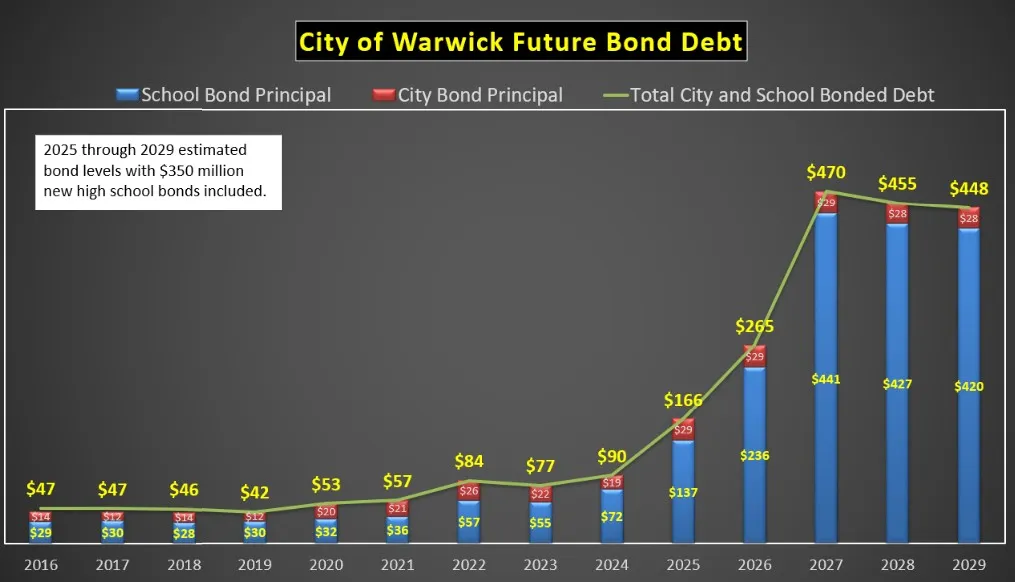
The construction of two new high schools will significantly increase Warwick’s bonded debt and require substantial annual debt payments for decades.

The Taxpayers’ Voice
Better Planning Today. A Stronger Warwick Tomorrow.
Warwick faces serious long-term financial challenges. Ignoring them will mean higher taxes, fewer services, and a harder future for our seniors, families, small business, and future generations.
My commitment is to plan ahead, make smarter decisions, and protect what matters most—our residents, our neighborhoods, and our city’s future.
The Financial Evidence
Warwick’s financial challenges did not develop overnight. These three trends show why better long-term planning cannot wait.
$448 Million
Estimated bonded debt by 2029
The construction of two new high schools will significantly increase Warwick’s bonded debt and require substantial annual debt payments for decades.
13 Schools
2024–25 enrollment compared with building capacity
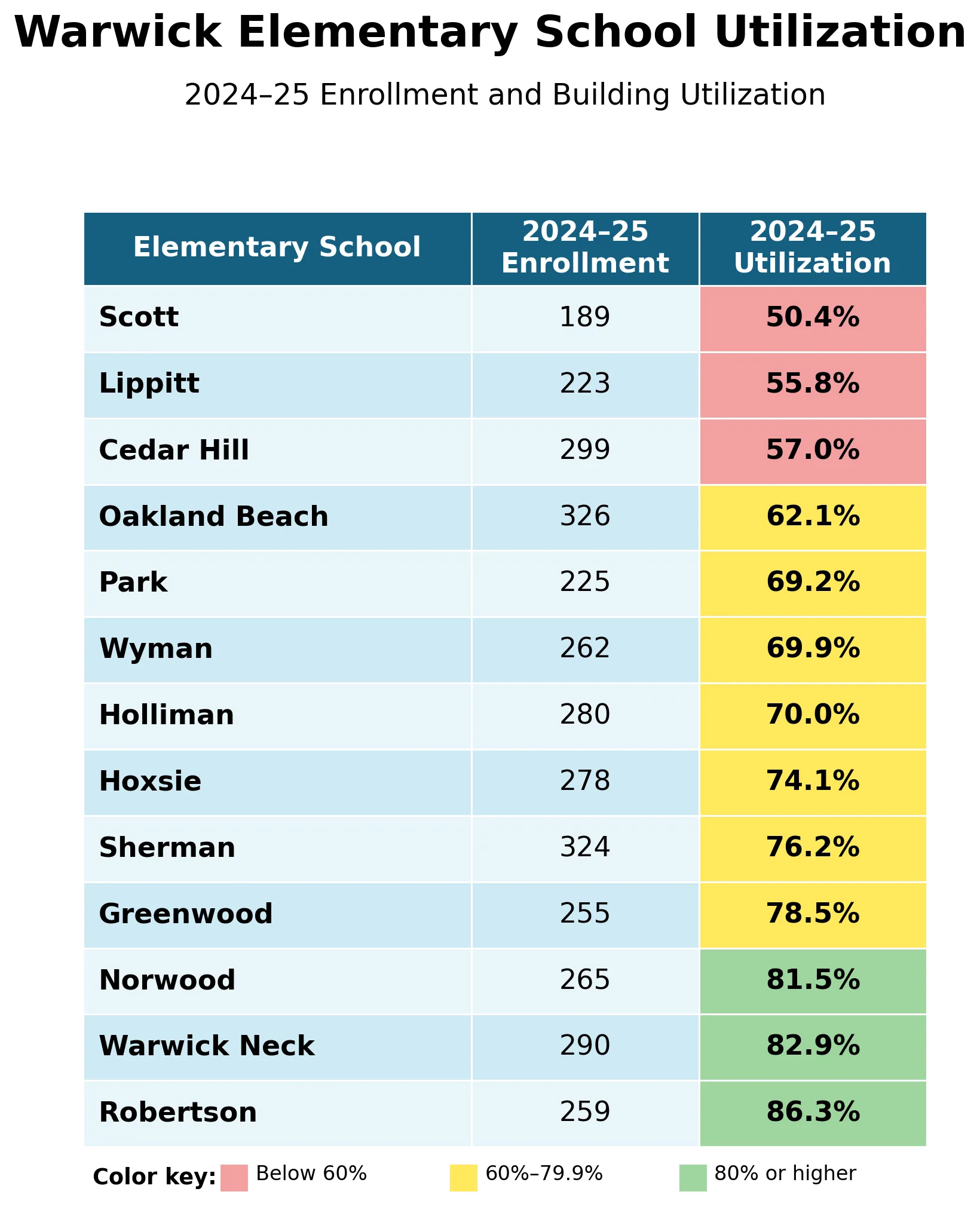
Planning for Warwick’s future means regularly evaluating whether school facilities, enrollment, and operating costs remain aligned. Long-term planning helps taxpayers understand future financial obligations while ensuring educational resources continue to meet students’ needs.
$42 Million
Increase during the most recent ten-year period
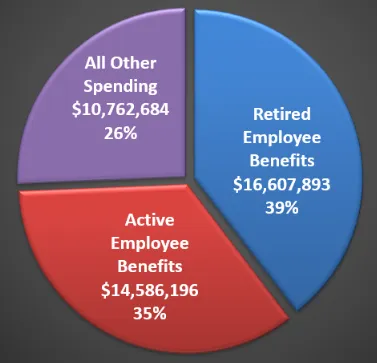
Every annual budget begins with financial commitments that have already been made. These include current employee compensation—including salaries, healthcare, and payroll taxes—as well as retirement obligations such as pensions and retiree healthcare earned through prior years of service.
Tell Me More About This Chart
We cannot change the decisions made yesterday.
But we can improve the decisions we make tomorrow.My Platform
Warwick’s financial challenges will not be solved by one budget or one election. They require a long-term strategy that identifies future costs early, measures results, and gives taxpayers the information they need before major decisions are made.
My Plan for
Establish a City Council committee dedicated to examining Warwick’s long-term financial condition rather than focusing only on the next annual budget.
The committee would review:
Require the City to maintain and regularly update a five-year forecast that reflects current financial information and changing assumptions.
The forecast should show taxpayers:
Before the Council approves major borrowing, labor agreements, new programs, or recurring spending, taxpayers should be shown both the immediate cost and the projected long-term impact.
Each major proposal should answer:
The committee should have the ability to recommend targeted operational reviews or audits when spending trends, service problems, or financial risks require closer examination.
The purpose would be to identify:
Financial information should be made available before major decisions are finalized—not after taxpayers have little opportunity to influence the outcome.
The City should publish understandable summaries of:
Better planning will not eliminate every difficult decision.
It will allow Warwick to identify problems earlier, consider more options, and give taxpayers a meaningful voice in determining the City’s priorities.
The decisions we make today will determine whether our city remains affordable, financially stable, and able to provide the services residents depend upon.